What Does a Deck or Outdoor Living Space Cost in Kansas? What Raises and Lowers the Price
A small ground-level deck and a covered, screened porch tied into your roofline are both outdoor living projects, and they sit at opposite ends of the budget. Size matters, but height, materials and whether the space has a roof usually matter more.
Here is what pushes the price of a deck, porch, pergola or pavilion up, what brings it down, and how to plan. After we see your yard and talk about how you want to use it, we can give you a realistic range.
Key takeaways
- Height and roofs drive cost more than square footage alone.
- Composite decking costs more up front than wood and much less to maintain.
- A simple rectangle on a flat lot is the most budget-friendly shape.
- Footings must go below the frost line, so Kansas decks need deeper footings than many people expect.
- Most attached decks need a permit, and HOA approval can add time.
What pushes an outdoor living price up
- Height: elevated decks need taller posts, bracing, stairs and code-compliant guardrails.
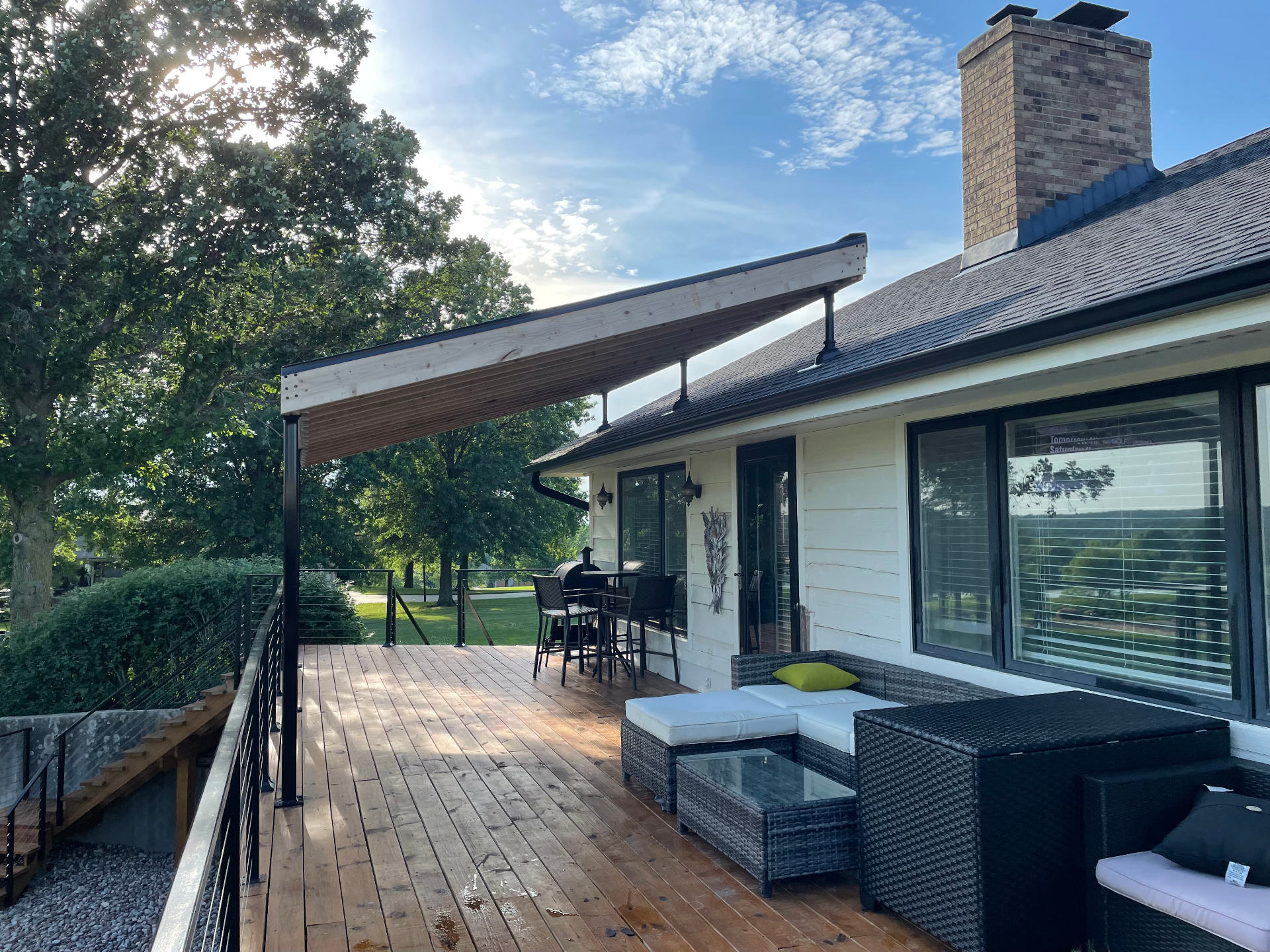
- A roof: a covered deck or porch adds structure, roofing, flashing into the house and often gutters, lighting and fans.
- Screening or enclosure: screened porches add framing, screen systems and doors.
- Composite, PVC or hardwood decking: costs more up front than pressure-treated wood.
- Premium railings: aluminum, cable and glass railings cost more than wood.
- Complex shapes: angles, curves, multiple levels and picture-frame borders take more material and labor.
- Sloped or difficult lots: steep grades, poor access and rocky soil make footings and framing harder.
- Extras: built-in benches, lighting, outdoor kitchens and electrical outlets each add a trade or a line item.
- Removing an old deck: demolition and disposal come first.
What brings an outdoor living price down
- Keep it close to the ground: a low deck needs less structure, shorter stairs and sometimes no guardrail.
- Choose a simple shape: a rectangle uses standard lumber lengths with little waste.
- Use pressure-treated framing: it is standard for the structure, even under composite decking.
- Pick standard railings: wood or simple composite railings cost less than metal or glass.
- Add a pergola instead of a roof: a pergola gives partial shade for less than a fully roofed structure.
- Reuse sound framing: if the old structure is in good shape, new decking and railings may be enough.
- Build in phases: start with the deck and add the roof, screens or kitchen later.
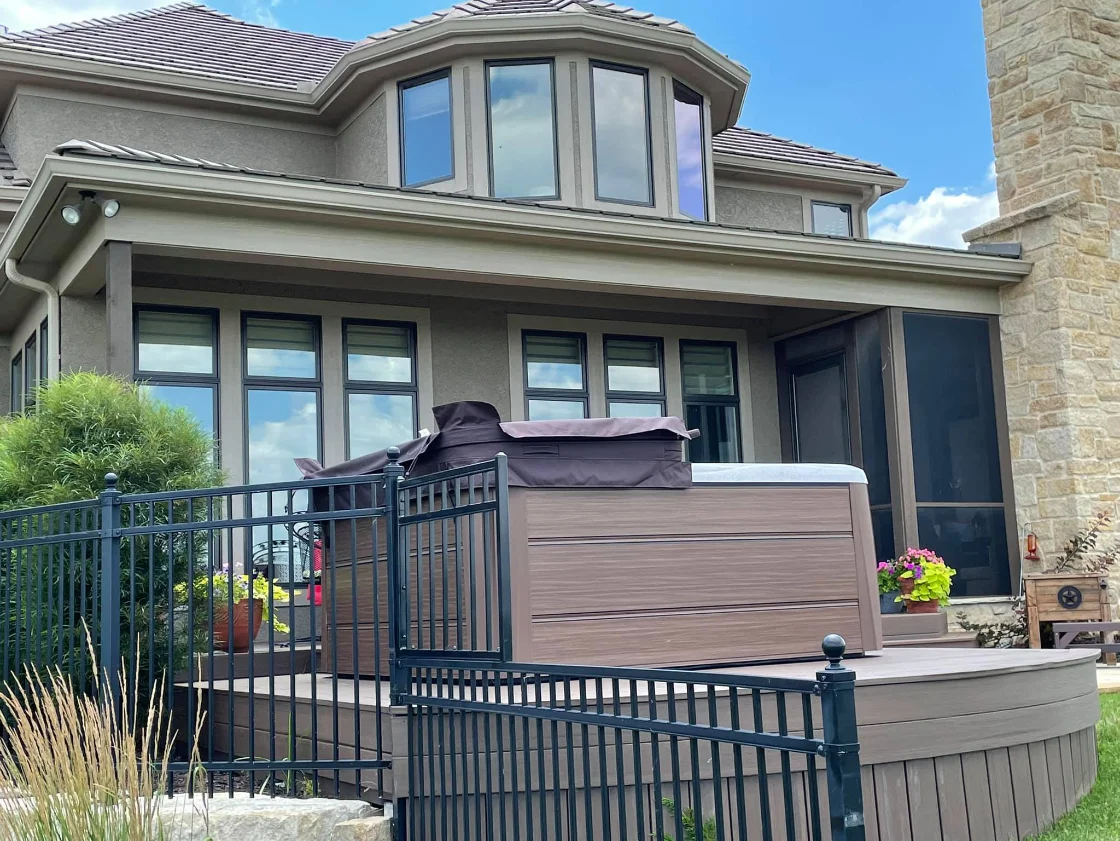
Wood vs. composite
Pressure-treated wood is the budget-friendly choice, but Kansas sun and freeze-thaw cycles mean regular cleaning, staining and sealing. Composite and PVC cost more up front, hold their color, and need little more than washing. If you plan to stay in the house a long time, composite often comes out ahead.
Permits, footings and HOAs
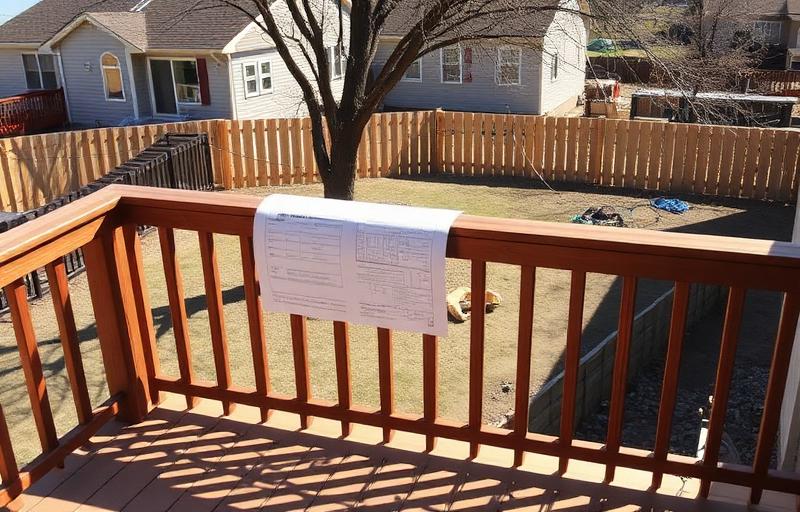
Most attached decks and covered structures need a permit, and footings have to reach below the frost line. Ottawa, for example, requires a permit for every deck in city limits, with footings at 36 inches. Our post on deck permits in Kansas covers the details. In HOA neighborhoods in Gardner, Olathe and Louisburg, plan time for approval of materials and colors.
Deck or patio?
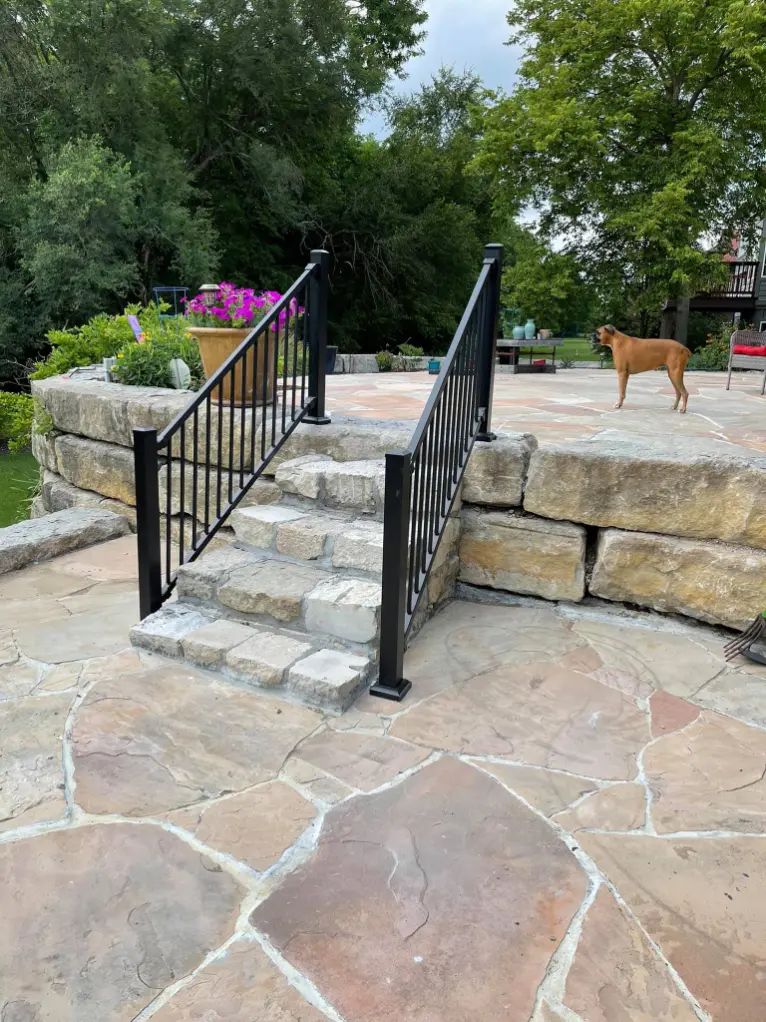
On a flat lot near grade, a patio can cost less and last longer. On a slope or with a raised back door, a deck is usually the right answer. Our post on deck vs. patio compares the two.
Our outdoor living planning checklist helps you decide how you will use the space, and Deck Building 101 explains how a deck goes together.
Frequently Asked Questions
How much does a deck cost in Kansas?
It depends on size, height, decking material, railings and whether the deck has a roof. A low, simple wood deck is the most budget-friendly, while an elevated composite deck with a roof and screens is the largest investment. We give a realistic range after seeing your yard.
Is composite decking worth the extra cost?
For many homeowners, yes. Composite costs more up front, but it does not need staining or sealing and holds up well to Kansas sun and freeze-thaw cycles. If you plan to stay for years, the savings in maintenance add up.
Does a covered deck cost much more than an open deck?
Yes. A roof adds structure, roofing, flashing where it ties into the house and often electrical for lights and fans. A pergola is a lower cost way to add some shade.
Do I need a permit for a deck?
Most attached or elevated decks need a permit, and some cities, like Ottawa, require one for every deck. Requirements vary, so we check with your city and handle the permit.
Can I add a roof or screens later?
Often, yes, if the deck is designed for it. We can size posts and footings for a future roof so the next phase is easier.
Every yard is different. Our First Call is a conversation about how you want to use your outdoor space and what fits your budget. Learn more about our outdoor living services, and start a conversation when you are ready.
Planning this project? See our outdoor living services
Ready To Start Your Project?
No pressure, just an honest conversation about your home.
Let's Start A Conversation