Deck vs Patio: Which Is Right for Your Kansas Backyard?
The short answer: your yard usually decides. If your back door sits well above the ground or your lot slopes away from the house, a deck is almost always the better fit. If the yard is fairly flat and the door is close to grade, a patio is often simpler, lower maintenance and easier on the budget.
A deck is a raised, framed structure built on posts and footings, usually wood or composite boards over a wood frame. A patio sits on the ground itself: poured concrete, stamped concrete, pavers or natural flagstone set on a prepared base. Both give you a place to sit outside. They just solve different problems.
Below we walk through when each one wins, the materials, how Kansas weather treats them, maintenance, what drives cost, permits, resale, and why many of the yards we work on in Ottawa and Johnson County end up with both.
Key takeaways
- Choose a deck for sloped yards, walkout basements, raised doors, second-story access or a view you want to sit above.
- Choose a patio for flat yards, fire pits, outdoor kitchens and the lowest ongoing maintenance.
- Kansas freeze-thaw cycles and clay soils are hard on both. Footing depth under a deck and base prep under a patio matter more than the surface you pick.
- Decks usually need a building permit, and in Ottawa city limits every deck does. Flat patios often do not, but setbacks, easements, stormwater rules and HOAs still apply.
- A deck off the door stepping down to a patio is a common and practical answer for Kansas yards.
Deck vs patio: the basic difference
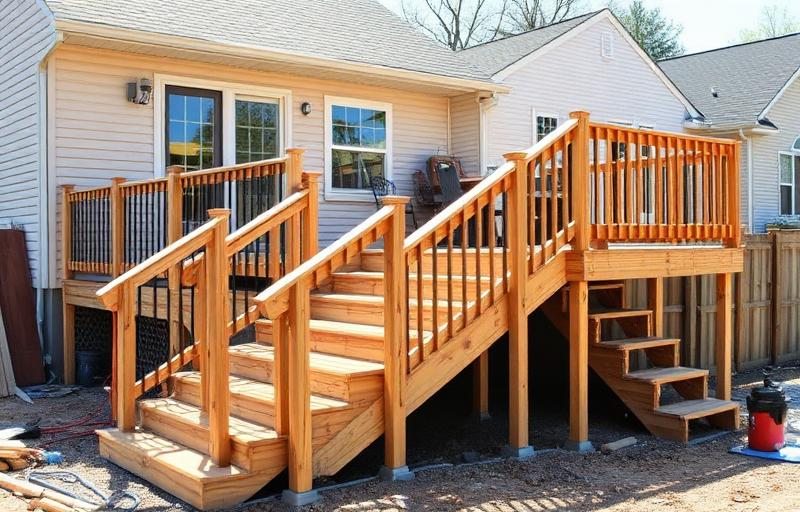
Think of a deck as a small building. It has footings that go below the frost line, posts, beams, joists and a surface, and it is often bolted to the house with a ledger board. Because it is framed, it can sit at whatever height your door needs, from a foot off the ground to a full story up.
A patio is closer to a sidewalk. The ground is excavated, a compacted gravel base goes in, and the surface is poured or laid on top. It sits at or just above grade, so it needs a door that is close to the ground or a few steps down to reach it.
When a deck is the better choice
- Sloped yards. A deck handles a slope with longer posts on the low side. Getting a patio level on the same slope usually means retaining walls and a lot of fill.
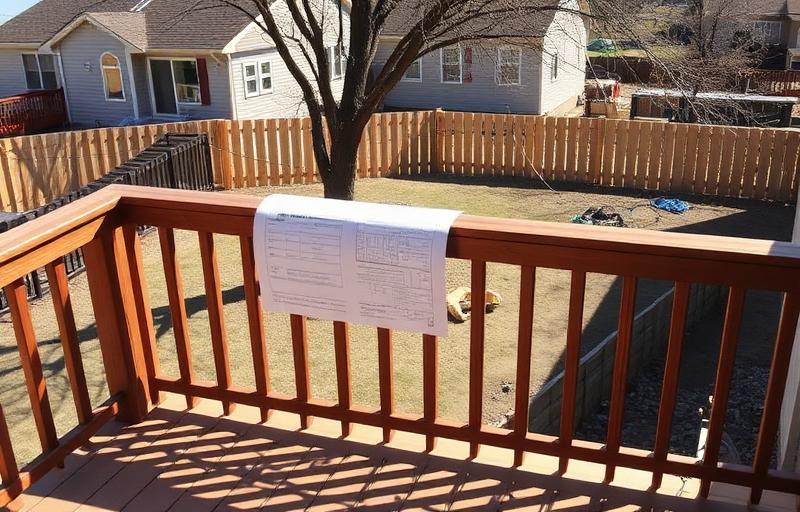
- Raised or walkout doors. Many homes around Ottawa and in Johnson County have a kitchen door several feet above the yard. A deck puts you on the same level as the kitchen, which is where people actually want to eat outside.
- Second-story access. On a walkout basement home, a deck off the main floor gives you outdoor space up top and shade underneath.
- Views. If you have a pasture, pond or tree line behind the house, sitting a few feet higher changes what you see.
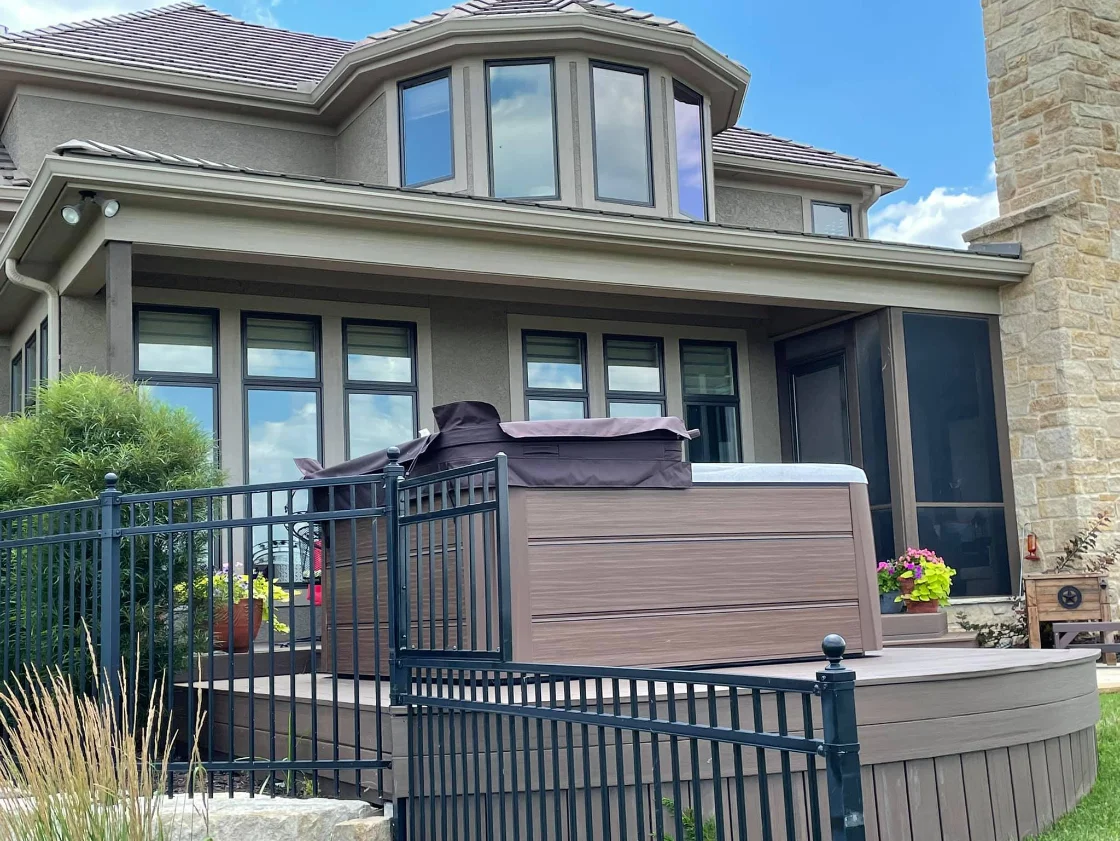
When a patio is the better choice
- Flat yards. If your door is a step or two above grade, a patio is the most direct way to get usable outdoor space.
- Fire pits. Open flame and wood or composite decking do not mix well. A fire pit belongs on stone, concrete or pavers.
- Outdoor kitchens. Grills, counters and built-in appliances are heavy. A patio carries that weight without special framing, and cleanup of grease and spills is easier on stone or concrete.
- Low maintenance. A well-built patio has no boards to stain, no fasteners to back out and no framing to rot.
- Ground-level living. For someone planning to age in place, a patio with a flush or near-flush door threshold avoids stairs entirely.
Deck materials
Pressure-treated wood
Pressure-treated pine is the most common framing material and the most budget-friendly decking. It is strong and easy to work with, but it checks, splits and fades in the Kansas sun unless it is sealed or stained regularly.
Cedar
Cedar is naturally rot resistant, lighter and better looking than treated pine. It still needs periodic cleaning and finish to keep its color, and it is softer, so furniture and pets can mark it.
Composite and PVC
Composite boards blend wood fiber and plastic; PVC boards are all synthetic. Both skip staining and resist rot, and they usually cost more up front than wood. The framing underneath is still wood, so it still needs to be built right. Our deck building guide goes deeper on framing, spacing and board choices.
Patio materials
- Poured concrete. Plain broom-finished concrete is typically the most budget-friendly patio surface. Control joints guide where it cracks, because all concrete cracks eventually.
- Stamped concrete. Concrete pressed with a pattern and colored to look like stone or brick. It needs resealing every few years to keep its color and resist freeze damage.
- Pavers. Individual concrete or clay units set on sand over a gravel base. If the ground moves, you can lift and reset a section instead of breaking out a slab.
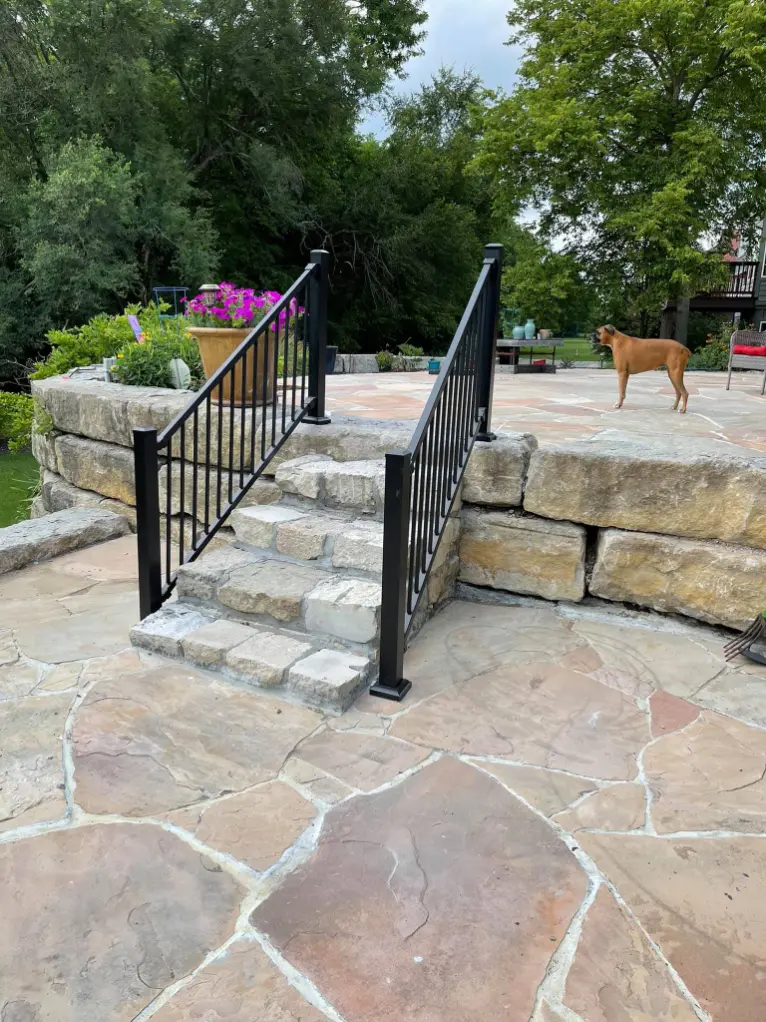
- Natural flagstone. Irregular stone set in sand or mortar. It has the most natural look and usually the highest material and labor cost, since every piece is fitted by hand.
How Kansas weather treats decks and patios
Our winters freeze and thaw over and over, and much of Franklin County and the metro sits on expansive clay that swells when wet and shrinks when dry. That movement heaves concrete slabs and shallow deck footings. Deck footings generally need to sit below the local frost line (36 inches in Ottawa, as general guidance to confirm with your building department). Patios need a properly compacted gravel base, not a slab poured on disturbed dirt.
Hail and UV are the other big factors. Hail can chip and dent composite and PVC boards and pits soft wood, while the summer sun fades and dries out any deck surface. Dark composite boards can get hot enough in July to be uncomfortable barefoot, so lighter colors or some shade make a real difference on a south or west facing deck.
Local note
Whichever you choose, water has to move away from the house. A patio should slope away from the foundation, and a deck ledger needs proper flashing. With how many basements around Ottawa see moisture, this is not a detail to skip.
Maintenance compared
Wood decks need the most attention: cleaning every year and a new coat of stain or sealer every few years, plus checking for loose boards, popped fasteners and soft spots. Composite and PVC decks mostly need washing, but the frame, ledger and railings still deserve a look each spring.
Patios are lower maintenance but not zero. Concrete and stamped concrete benefit from sealing, pavers may need joint sand topped up and the occasional weed pulled, and flagstone set in sand can shift over time.
What drives the cost of each
We will not publish numbers here, because every yard is different. What we can tell you is what moves the price. For decks: height above grade, square footage, the number of footings, decking material, railing type, stairs, and any roof, lighting or hot tub load. A tall deck with composite boards and metal railing sits at the upper end; a low treated-wood deck sits at the lower end.
For patios: excavation and base work, how much grading or retaining is needed on a slope, the surface material, drainage, and any built-ins like seat walls, fire pits or kitchens. On flat ground, a simple concrete patio is often the most budget-friendly outdoor space you can add. Natural flagstone and anything that needs retaining walls climb from there.
Permits for decks and patios
Decks usually need a building permit. Inside Ottawa city limits, every deck needs one regardless of size, because the city deleted the small-deck exemption in its adopted code. We cover the details city by city in our post on deck permits in Kansas.
A flat, on-grade patio often does not need a building permit, but that does not mean there are no rules. Check these before you pour:
- Setbacks from property lines, which zoning enforces even when no building permit is required.
- Easements, since utility and drainage easements often run along the back of lots where patios go.
- Impervious surface and stormwater rules, which some cities apply to large paved areas.
- HOA approval, common in Johnson County neighborhoods, which is separate from any city permit.
- Roofs, pergolas, electrical and gas. Covering a patio, wiring lights or running a gas line to an outdoor kitchen typically does need permits and inspections.
Resale: how buyers see each
Buyers respond to usable outdoor space that looks cared for. A solid composite deck or a clean paver patio both read well. A gray, splintering wood deck reads as a project, and a heaved, cracked slab reads as a drainage problem. The best choice for resale is the one that fits the house: a deck on a walkout home, a patio on a ranch with a low back door.
Why many yards get both
On a lot of Kansas homes, the best answer is a deck off the kitchen door with stairs stepping down to a patio. The deck handles the height and gives you a grill and dining spot close to the kitchen. The patio below handles the fire pit, extra seating and anything heavy. Under a second-story deck, a patio also gives you a shaded, dry spot once the deck above has a drainage system.
Covers, pergolas and screened porches
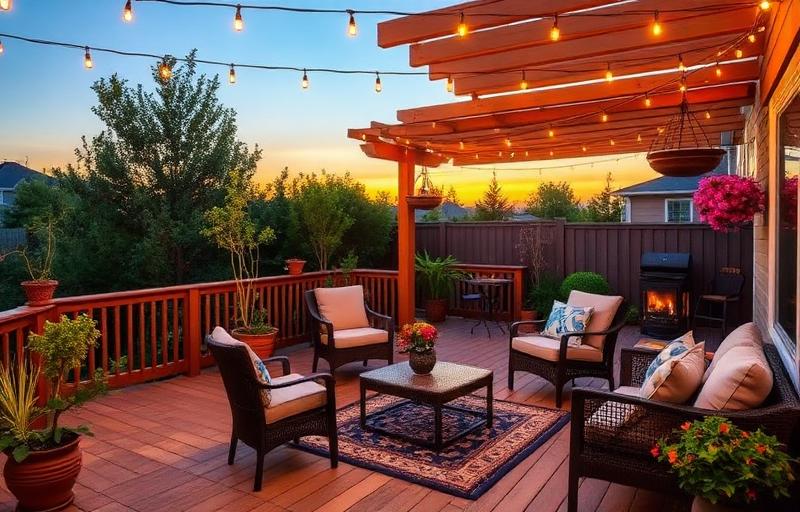
A pergola adds partial shade and some structure to either a deck or a patio. A solid roof gives full shade and rain protection, and a screened porch keeps the mosquitoes out on humid Kansas evenings. All three add load and usually need permits, so plan them with the deck or patio rather than bolting them on later. Our post on renovating your patio or deck covers more ideas, and our outdoor living checklist helps you sort out what you actually need.
We design and build decks, patios, covers and pergolas across Franklin, Miami and Johnson counties. See our outdoor living services, including our work for patio and deck projects in Overland Park and outdoor living in Ottawa.
Deck vs patio FAQs
Frequently Asked Questions
Is a deck or a patio cheaper?
It depends on the yard. On flat ground, a simple concrete patio is often the more budget-friendly option. Raised decks, composite and PVC boards, metal railings and natural stone patios all push costs up, and a sloped yard can make a patio more expensive than a deck because of grading and retaining walls.
Do you need a permit to build a patio in Kansas?
A flat, on-grade patio often does not need a building permit, but rules vary by city and county. Setbacks, easements, stormwater or impervious-surface limits and HOA rules can still apply. Roofs, pergolas, electrical work and gas lines for outdoor kitchens typically do need permits, so check with your local building department first.
Which lasts longer, a deck or a patio?
A well-built patio on a properly compacted base generally outlasts a deck, since there is no framing to rot or fasteners to loosen. A deck built with composite or PVC boards on a well-flashed, properly footed frame can last a long time with basic care. In Kansas, base prep and footing depth matter more than the surface.
Does a deck or patio add more value?
Both add appeal when they fit the house and are in good shape. Buyers respond to outdoor space that is usable and well kept. A deck makes the most sense on homes with raised or walkout doors, and a patio makes the most sense on homes close to grade.
Can you put a patio under a deck?
Yes, and it is a common setup on walkout homes. The patio gives you shaded space below the deck. If you want it to stay dry, add an under-deck drainage system and make sure the patio slopes away from the foundation.
Not sure whether your yard wants a deck, a patio or both? Start a conversation with our team, and we will walk the yard with you and talk through what fits the house and how you want to use it.
Planning this project? See our outdoor living services
Ready To Start Your Project?
No pressure, just an honest conversation about your home.
Let's Start A Conversation