
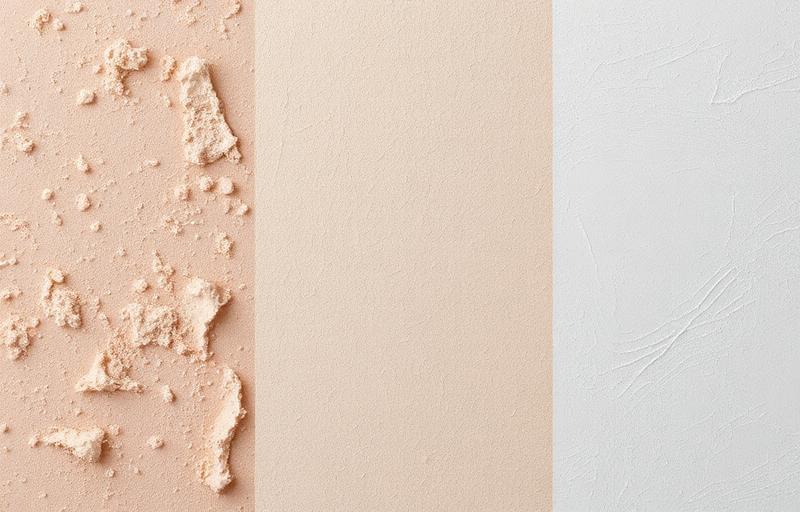
Types of Drywall Texture: A Remodeler's Guide to Every Finish
The most common types of drywall texture are smooth (a level 5 finish), orange peel, knockdown, skip trowel, sand swirl, slap brush or stomp, popcorn (acoustic) ceilings, Santa Fe or Spanish lace, and hand-troweled finishes. They differ in how they are applied, how much they hide imperfect walls, how easy they are to patch, and what style of house they suit.
If you want the short version: smooth walls are the most modern look but show every flaw and take the most finishing labor. Orange peel and light knockdown are the practical middle ground, and they hide minor dents and seams. Heavier textures like skip trowel and Santa Fe add character but are harder to match when you patch or remodel.
Below we break down each texture, explain the drywall finish levels that sit underneath them, and cover what we run into in real remodels around Ottawa and Franklin County, from plaster and lath in older homes to popcorn ceilings in mid-century ranches.
Key takeaways
- Smooth walls need a level 5 finish, the highest drywall finish level, which is why smooth usually costs more than textured.
- Orange peel and knockdown are the most common textures in Kansas homes built in recent decades, and they hide minor flaws well.
- Texture is hard to match on patches. Remodel patches show because the texture pattern, thickness and paint sheen differ from the old wall.
- Popcorn ceilings in homes built before the 1980s may contain asbestos. Test before scraping or sanding.
- Textured walls can be skim-coated smooth, which is often cleaner than trying to remove the texture.
First, what drywall is and how finishing works
Drywall, also called gypsum board or sheetrock, is a gypsum core sandwiched between paper facings. It is screwed to studs or ceiling joists, and then the seams and screw heads are taped and covered with joint compound (mud). Texture is applied after that finishing work, and paint goes on last.
The amount of finishing under the texture matters as much as the texture itself. The drywall industry, through the Gypsum Association and allied trade groups, defines six finish levels from 0 to 5. Heavier textures can go over lower finish levels because they hide more. Smooth walls need the highest.
Drywall finish levels 0 to 5
- Level 0: Drywall hung, no taping or finishing. Used for temporary work or where the finish is not decided yet.
- Level 1: Tape embedded in joint compound at the seams, nothing more. Common in attics, above ceilings and other hidden areas.
- Level 2: Tape embedded plus one coat of compound over the tape and screw heads. Used in garages, storage areas and as a base behind tile.
- Level 3: Two coats over tape and fasteners. Suitable under heavy textures like heavy knockdown or skip trowel.
- Level 4: Three coats, sanded smooth at the joints. The standard for light textures like orange peel and for flat paint on walls without harsh lighting.
- Level 5: Level 4 plus a thin skim coat of compound over the entire surface. Required for truly smooth walls, glossier paints and walls hit by strong side light from windows or fixtures.
The main types of drywall texture
For each texture below, we cover the look, how it is applied, how well it hides flaws, how easy it is to patch, how it cleans, and the style of home it suits.
1. Smooth (level 5 finish)
Look: flat, clean, no visible pattern. Application: a full level 5 finish, meaning a skim coat over the whole wall, careful sanding, and a good primer. Hides flaws: poorly. Any seam, screw pop, or wavy stud shows, especially in raking light from a window. Patching: the easiest to match in theory since there is no pattern, but the patch has to be feathered wide and sanded perfectly. Cleaning: easiest to wipe down. Suits: modern, contemporary and transitional homes, and anyone who wants a clean backdrop for art and trim.
2. Orange peel
Look: a fine, dimpled surface like the skin of an orange. Application: thinned joint compound sprayed from a hopper gun with small droplets; the thickness is controlled by the mix, air pressure and nozzle. Hides flaws: minor ones like small dents and slightly visible seams. Patching: moderate. Aerosol spray cans and hopper guns can get close, but matching droplet size takes practice. Cleaning: easy with a damp sponge, especially with a satin or eggshell paint. Suits: almost any home; it is one of the most common textures in houses built from the 1980s on.
3. Knockdown
Look: flattened splatter spots that resemble a mottled, stucco-like surface. Application: compound is sprayed in larger droplets, allowed to set briefly, then lightly skimmed with a wide knockdown knife to flatten the peaks. Hides flaws: well. Patching: moderate to hard, since timing and droplet size both affect the result. Cleaning: fine, though the texture holds a little more dust than orange peel. Suits: ranch and suburban homes, Southwest and Mediterranean styles. A light knockdown is still very common in newer Johnson County homes.
4. Skip trowel
Look: irregular, flat patches of compound over a smoother base, giving an old-world plaster feel. Application: compound is applied by hand with a curved trowel held at a low angle so it 'skips' across the wall, leaving random pads. Hides flaws: very well. Patching: hard, because it is hand-applied and the pattern depends on the person doing it. Cleaning: moderate. Suits: Tuscan, Spanish, rustic and farmhouse-leaning interiors. It is labor-intensive, which makes it one of the more involved textures to apply.
5. Sand swirl
Look: overlapping rainbow-shaped swirls or arcs. Application: a primer or thin compound mixed with sand (perlite) is rolled on, then brushed in overlapping arcs with a wide brush. Hides flaws: well. Patching: hard; swirl size and rhythm vary by installer. Cleaning: the gritty surface holds dust. Suits: mostly seen on ceilings in older homes; it is rarely chosen for new work today.
6. Slap brush and stomp
Look: a raised, random pattern of ridges or crow's-foot shapes. Application: compound is rolled on, then slapped or stomped with a stiff brush, sometimes knocked down lightly after. Hides flaws: very well, which is why it is common on ceilings. Patching: moderate; it is forgiving because the pattern is random. Cleaning: the ridges collect dust and cobwebs. Suits: ceilings in ranch homes and basements, and rooms where the drywall work underneath is rough.
7. Popcorn (acoustic) ceilings
Look: bumpy, cottage-cheese-like ceiling texture. Application: a sprayed material containing polystyrene or vermiculite particles. Hides flaws: extremely well, and it softens echo slightly. Patching: hard to match and messy. Cleaning: nearly impossible; it crumbles when scrubbed and holds dust and smoke stains. Suits: it is common in mid-century and 1970s homes, and it is now widely considered dated.
Popcorn and asbestos
Popcorn ceilings in homes built before the 1980s may contain asbestos. Do not scrape, sand or drill into one until a sample has been tested by a qualified lab. If it tests positive, removal or encapsulation should be handled by a licensed abatement contractor.
8. Santa Fe and Spanish lace
Look: two-tone, layered texture where a smoother base peeks through a raised, lacy top layer. Santa Fe tends to be flatter and broader; Spanish lace is more intricate. Application: compound is troweled on in layers, with the top layer skimmed to create the pattern. Hides flaws: very well. Patching: hard, especially on large walls. Cleaning: moderate. Suits: Southwest, adobe and Spanish-revival interiors.
9. Hand-troweled
Look: soft, sweeping trowel marks that mimic real plaster, from subtle to bold. Application: compound or veneer plaster applied and worked by hand with a trowel. Hides flaws: well, depending on how heavy it is. Patching: hard, since it reflects one tradesperson's hand. Cleaning: good if the finish is fairly flat. Suits: custom, traditional and European-inspired homes, and accent walls where you want warmth without wallpaper.
Textured walls vs smooth walls
The trend in remodeling right now is toward smooth walls or very light textures like a fine orange peel. Smooth walls read clean and modern, make paint colors look richer, and are easy to wipe down. They pair well with simple trim profiles; our guide to interior trim types covers how trim and wall finish work together.
The trade-off is labor. A smooth finish shows every flaw, so it needs a level 5 finish, more sanding, a good primer and careful lighting checks. That is why smooth walls typically cost more than textured ones. Texture hides small imperfections, dings and settling cracks, which is a real advantage in family homes and in older houses where framing is not perfectly straight.
- Smooth pros: modern look, easy to clean, easiest to repaint in bold colors. Cons: more finishing labor, shows dents and seams, less forgiving of crooked framing.
- Textured pros: hides flaws, faster to finish, forgiving in busy households. Cons: can look dated if heavy, harder to patch invisibly, holds dust.
Paint sheen matters too. Glossier paints show texture and flaws more; flatter sheens hide them. Our post on what kind of paint to use in your home covers sheen by room.
Matching texture when patching or remodeling
Remodel patches show for a few predictable reasons: the droplet size or trowel pattern is slightly different, the patch sits a hair higher or lower than the old wall, the new compound absorbs paint differently, or the sheen does not match. Old walls have also collected years of paint layers that soften the texture, while a fresh patch is crisp.
To blend a patch, we practice the texture on a scrap board first, feather the edges of the patch well past the damaged area, prime the patched area so it absorbs paint like the rest, and repaint the whole wall corner to corner rather than touching up a spot. On a big remodel like moving a wall or opening a kitchen, it is often smarter to re-texture or skim the full room so everything matches.
Removing or skim-coating texture
You can remove texture, but how depends on the texture and paint. Unpainted popcorn can sometimes be wetted and scraped once it has tested negative for asbestos. Painted texture does not soak well, so scraping it usually tears the paper face of the drywall.
The cleaner route for most walls is a skim coat: knock down high points, prime, then apply thin coats of compound over the whole surface and sand to a level 5 finish. It is dusty, detailed work, and it rewards patience. In some cases, especially with damaged ceilings, hanging new drywall over the old surface or replacing it outright is faster and flatter.
Older homes in Ottawa and around Kansas
A lot of Ottawa's older housing stock near downtown still has original plaster and lath walls, not drywall. Plaster is hard, has its own character, and does not take drywall texture the same way. When we open plaster walls, we either repair the plaster, patch with drywall and skim to blend, or replace full walls with drywall depending on condition and scope.
Mid-century ranches around Ottawa, Paola and the older parts of Johnson County often have popcorn ceilings and heavier wall textures. Kansas freeze-thaw cycles and clay soils also cause seasonal movement, so settling cracks are common in older homes. Texture hides those better than smooth walls, which is worth weighing if your house moves. Basements add moisture to the mix; our basement wall ideas post covers options for below-grade walls.
Local note
In Ottawa and Franklin County homes built before the 1980s, treat popcorn ceilings and old joint compound as possible asbestos until tested. It is a simple step to take before any demo.
Wall finishes are part of almost every whole-home remodel we do. If you are in town, our Ottawa whole-home remodeling page explains how we approach older houses, and our project portfolio shows finished rooms.
Drywall texture FAQs
Frequently Asked Questions
What are the most common drywall textures?
The most common drywall textures are orange peel, knockdown and smooth walls, followed by skip trowel, slap brush and popcorn ceilings in older homes. Orange peel and light knockdown are popular because they hide minor flaws and are fast to apply. Smooth walls are becoming more common in remodels.
What is the most modern drywall texture?
A smooth, level 5 finish is the most modern look, with a very light orange peel as the close runner-up. Both give a clean backdrop that suits contemporary and transitional interiors. Heavy textures like Spanish lace and popcorn read as dated to most buyers.
Are textured walls outdated?
Heavy textures and popcorn ceilings are widely considered outdated, but light textures like orange peel and light knockdown are still very common and practical. They hide wall imperfections and hold up well in busy homes. The trend is toward smooth or lightly textured walls.
Is smooth drywall more expensive than textured?
Yes, smooth walls usually cost more because they require a level 5 finish with a skim coat over the entire surface and extra sanding. Texture hides small flaws, so it takes less finishing labor. The difference grows on walls with strong window light, where every imperfection shows.
Can you remove texture from walls?
Yes. Unpainted popcorn can sometimes be scraped after testing negative for asbestos, but painted texture usually has to be skim-coated smooth instead. Skim-coating means applying thin coats of joint compound over the whole wall and sanding it to a level 5 finish. Badly damaged surfaces are sometimes better replaced.
Deciding between smooth walls and texture as part of a bigger project? Start a conversation with our team, and we will look at your walls in person and talk through what makes sense for your house.
Planning this project? See our whole-home remodeling services
Ready To Start Your Project?
No pressure, just an honest conversation about your home.
Let's Start A ConversationRelated Articles
Sherwin-Williams Emerald vs Cashmere vs Duration: Which Paint Where
July 10, 2023
What Are the Different Kinds of Interior Trim and How Much Do They Cost?
May 29, 2023
Basement Wall Ideas: Finished and Unfinished Options That Work
March 20, 2025