Bathroom Countertop Materials: Pros, Cons and the Best Pick for Each Bath
For most bathrooms, quartz is the best all-around countertop material: it does not need sealing, it shrugs off makeup and toothpaste, and it comes in almost any look. Granite is a close second if you want natural stone and do not mind sealing it now and then. Solid surface and cultured marble are the practical picks when you want an integrated sink and easy repairs, and laminate is still the most budget-friendly option for a rental or a quick refresh.
A bathroom vanity top lives a different life than a kitchen counter. It sees less cutting and hot pans, but more standing water, hair tools, nail polish remover, hair dye, toothpaste and cleaning chemicals. So the best vanity top material for a bathroom is the one that handles those things with the least fuss, in a size and look that fits your room.
Below we cover the common types of bathroom countertops, what each is made of, how it behaves day to day, how it compares on cost, and where it fits best. Then we match materials to situations like kids' baths, primary baths, rentals and aging in place.
Key takeaways
- Quartz is the low-maintenance favorite for most vanity tops. It is non-porous and never needs sealing.
- Granite and quartzite are durable natural stones that need occasional sealing.
- Marble looks classic but etches from acidic products and scratches more easily.
- Solid surface and cultured marble allow seamless integrated sinks, and minor damage can often be repaired.
- Laminate is the most budget-friendly option; butcher block and concrete are rarely the right call in a wet bathroom.
What to weigh before you choose
- Water. Splashes sit around the faucet and sink edge every day. Porous materials need sealing to stay stain-free.
- Heat. Curling irons and straighteners can scorch some surfaces. A heat mat is a good habit on anything.
- Chemicals and stains. Hair dye, nail polish remover, self-tanner and some cleaners are hard on softer or porous tops.
- Sink style. Undermount, vessel or integrated sinks each work better with certain materials.
- Cost. Material, fabrication, edge profile and sink cutouts all count. Vanity tops are small, so a remnant can bring a pricier material within reach.
Bathroom countertop materials compared
Quartz
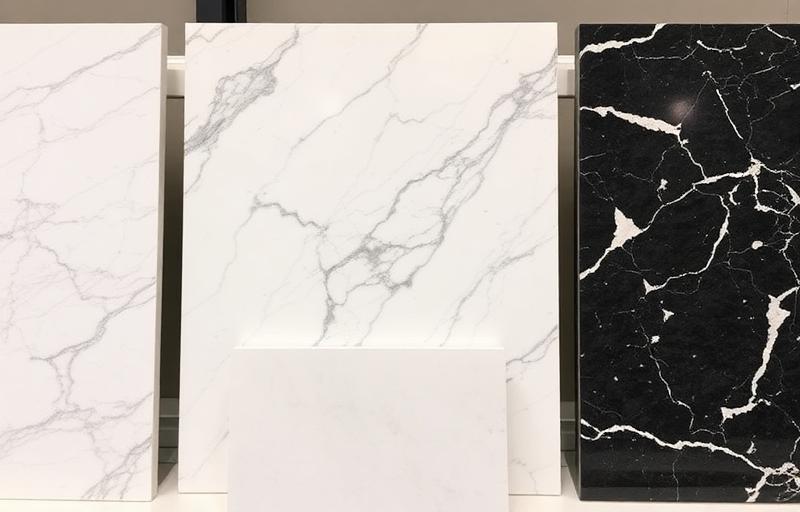
Quartz countertops are engineered from crushed natural quartz bound with resin and pigment. The result is dense, non-porous and consistent from slab to slab, with looks that range from solid white to convincing marble veining.
- Pros: no sealing, resists stains from makeup and toothpaste, hard to scratch, wide color range.
- Cons: the resin can discolor or scorch under direct high heat, so do not rest a hot curling iron on it. Seams are visible on long tops.
- Maintenance: mild soap and water. Avoid harsh solvents and bleach-heavy cleaners.
- Cost: mid to upper range, usually comparable to granite.
- Best use: primary baths, kids' baths and almost any vanity where you want low upkeep.
Granite
Granite is quarried natural stone, cut into slabs, so every piece is a little different. It is hard, holds up to heat well and has been a vanity staple for decades. Our post on the difference between quartz and granite countertops goes deeper on those two.
- Pros: very durable, handles hot tools better than engineered surfaces, one-of-a-kind patterns.
- Cons: porous to varying degrees, so it needs periodic sealing. Lighter granites can show oil or dye stains if the sealer wears.
- Maintenance: stone-safe cleaner and resealing as needed. A water drop test tells you when.
- Cost: mid to upper range depending on the stone.
- Best use: primary baths and anyone who likes natural stone and does not mind a little upkeep.
Marble
Marble is softer than granite and more reactive. It has a classic look that people love, and in a guest bath that gets light use it can work well.
- Pros: timeless veining, handles heat well, stays cool to the touch.
- Cons: etches from acidic products like some toners, cleaners and even toothpaste left sitting. Scratches and stains more easily than granite or quartz.
- Maintenance: regular sealing and quick wipe-ups. Accept that it will develop a patina.
- Cost: upper range, especially for premium slabs.
- Best use: powder rooms and guest baths, or owners who welcome the lived-in look.
Quartzite
Quartzite is a natural stone, not to be confused with engineered quartz. It often looks like marble but is much harder.
- Pros: very hard, heat resistant, marble-like looks with more durability.
- Cons: needs sealing, and some stones sold as quartzite behave more like marble. Harder to fabricate.
- Maintenance: similar to granite.
- Cost: typically at the upper end of the natural stones.
- Best use: primary baths where you want a natural marble look that holds up.
Solid surface
Solid surface is made from acrylic or polyester resins with mineral fillers. It is the same material all the way through, which means scratches can often be sanded out and sinks can be molded right into the top.
- Pros: non-porous, seamless, integrated sinks, repairable.
- Cons: softer than stone, so it scratches, and it can scorch or deform under a hot tool.
- Maintenance: soap and water, with a light buffing now and then.
- Cost: mid range.
- Best use: kids' baths, aging-in-place baths and anywhere you want easy cleanup with no seams at the sink.
Cultured marble
Cultured marble is a cast blend of crushed stone and resin with a clear gelcoat on top. It is the one-piece vanity top with a molded bowl that many Ottawa homes built in the seventies and eighties still have, and newer versions look much better than the old swirled ones.
- Pros: one piece with an integrated sink, easy to wipe down, budget-friendly.
- Cons: the gelcoat can scratch, dull or crack under heat or a heavy impact. Styles are more limited.
- Maintenance: non-abrasive cleaners only.
- Cost: lower to mid range.
- Best use: hall baths, rentals and simple replacements where a seamless sink matters.
Porcelain slab
Large porcelain slabs are fired at very high heat, so they are dense, stain resistant and unbothered by most chemicals. They can mimic stone or concrete with thin, clean profiles.
- Pros: excellent stain, heat and chemical resistance, very low maintenance.
- Cons: edges can chip, and fabrication takes experience. The printed pattern may not run through the body, which shows on some edge profiles.
- Maintenance: almost none beyond regular cleaning.
- Cost: mid to upper range.
- Best use: modern designs, and baths where you want the top to match large-format wall tile.
Laminate
Laminate is a thin decorative layer over particleboard. Modern patterns are much better than they used to be.
- Pros: the most budget-friendly option, many patterns, quick to install.
- Cons: water that gets into seams or the cutout swells the core. Heat and sharp objects damage it. Undermount sinks are usually not an option.
- Maintenance: easy cleaning, but keep the edges and seams dry.
- Cost: lowest of the group.
- Best use: rentals, basement baths and short-term refreshes.
Concrete
Concrete tops are cast in place or precast and sealed. They can be shaped into integrated sinks and look great in industrial or rustic rooms, but they need a good sealer, can develop hairline cracks and may stain if the sealer wears. Cost is usually mid to upper range because of the custom labor. We see them more often in design-forward powder rooms than in busy family baths.
Butcher block
Wood tops show up in bathroom photos, but we rarely recommend them in a bath. Standing water around the faucet will find any gap in the finish, and humid Kansas summers make wood move. If you love the look, keep it in a powder room with a vessel sink and a marine-grade finish, and expect to refinish it.
Quick picks by situation
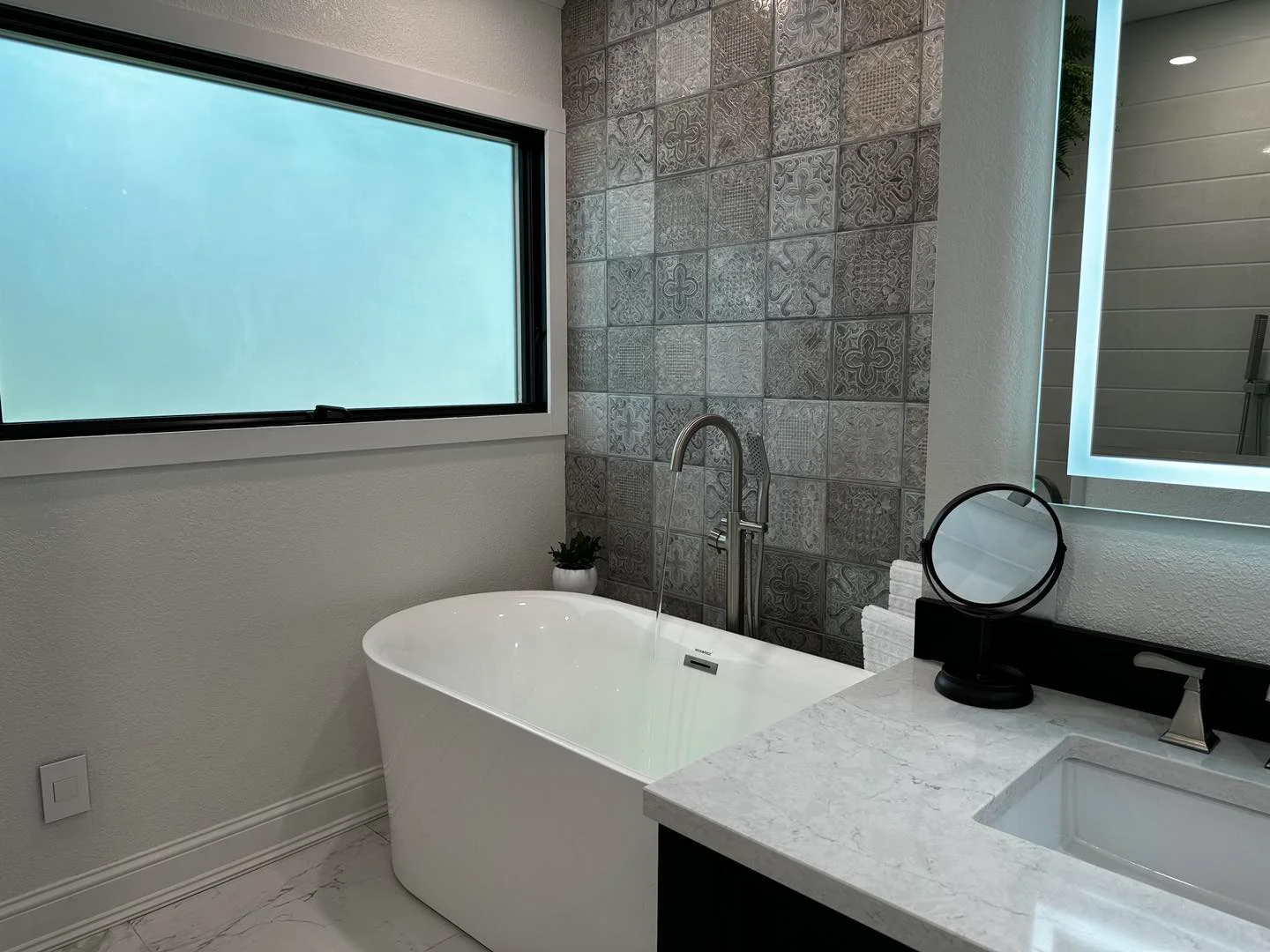
- Kids' bath: quartz or solid surface. Both handle toothpaste, soap scum and marker, and neither needs sealing.
- Primary bath: quartz, granite or quartzite. Pick based on whether you want consistency or natural variation.
- Rental or basement bath: laminate or cultured marble. They are budget-friendly and easy to replace.
- Aging in place: solid surface or quartz with an eased edge, a comfortable counter height and knee space where needed. Fewer seams means less upkeep.
- Powder room: anything goes, including marble or concrete, since use is light.
Edge profiles and backsplashes
The edge you choose affects both look and comfort. An eased edge (slightly rounded square) is the most common and the easiest on hips and kids' heads. A bevel or small bullnose softens it further. Ogee and other decorative edges suit traditional rooms but cost more to fabricate and collect more grime.
For the backsplash, you can use a short splash cut from the same material, a full-height splash to the mirror, or tile. A matching short splash is the simplest and seals the joint between top and wall, which is where water likes to sneak in.
Integrated, undermount and vessel sinks
Integrated sinks are molded into the top, so there is no rim or seam to clean. Solid surface, cultured marble and concrete do this naturally. Stone, quartz and porcelain usually pair with an undermount sink, which gives a clean edge and lets you wipe water straight into the bowl. Vessel sinks sit on top and work with almost any material, including laminate and wood.
The vanity underneath matters just as much. Our bathroom vanity guide covers sizes, materials and storage, and our low-maintenance bathroom design tips show how the top fits into an easy-to-clean room.
How countertops fit into the budget
A vanity top is usually a smaller line item than tile or a new shower, but fabrication, sink cutouts and edge profiles add up. Using a remnant piece from a stone yard is a smart way to get quartz or granite on a small vanity. For the bigger picture, see our guide to bathroom remodel costs in Kansas.
Frequently Asked Questions
What are the best bathroom countertop materials?
Quartz is the best all-around choice for most bathrooms because it is non-porous and never needs sealing. Granite and quartzite are excellent natural stone options with occasional sealing. Solid surface is a strong pick when you want an integrated sink.
What types of bathroom countertops are there?
The common types are quartz, granite, marble, quartzite, solid surface, cultured marble, porcelain slab, laminate and concrete. Butcher block shows up occasionally but is rarely a good fit in a wet bathroom.
What are bathroom countertops made of?
It depends on the type. Quartz is crushed natural quartz bound with resin, granite and marble are quarried stone, solid surface is acrylic or polyester resin with minerals, and cultured marble is cast stone and resin with a gelcoat. Laminate is a decorative layer over a particleboard core.
What is the best vanity top material for a bathroom?
For most households it is quartz, because it resists stains from makeup and toothpaste and needs no sealing. If you want a seamless sink, solid surface or cultured marble works well. For rentals, laminate or cultured marble keeps cost down.
What bathroom countertop surfaces handle hot tools best?
Natural stones like granite and quartzite handle heat best, and porcelain slab is also very heat resistant. Quartz, solid surface, cultured marble and laminate can scorch or discolor under a hot curling iron. A heat mat protects any surface.
The right top depends on who uses the bathroom and how. If you are remodeling a bath in Olathe or elsewhere in Johnson County, see our bathroom remodeling in Olathe, KS page, browse our bathroom remodeling services, and start a conversation with our team.
Planning this project? See our bathroom remodeling services
Ready To Start Your Project?
No pressure, just an honest conversation about your home.
Let's Start A ConversationRelated Articles
Bathroom Vanity Guide: Sizes, Materials and What Drives Cost
September 28, 2026
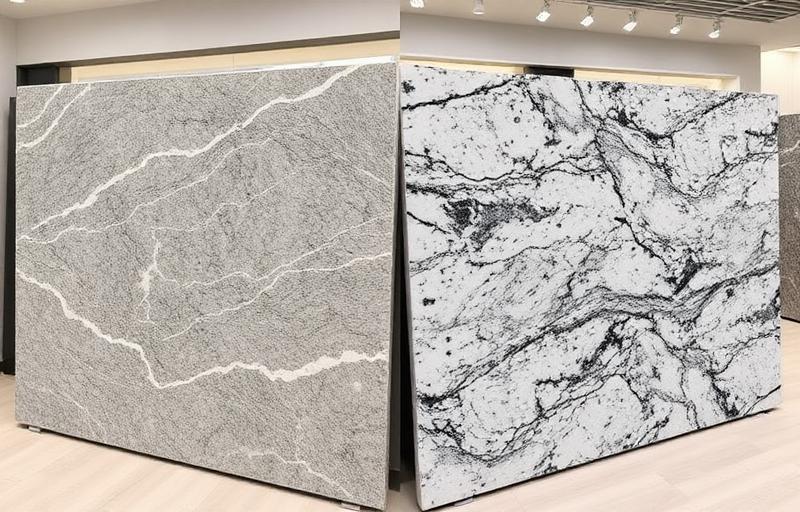
Granite vs Quartz Countertops: Which Is Best for Your Bathroom and Kitchen?
November 26, 2024
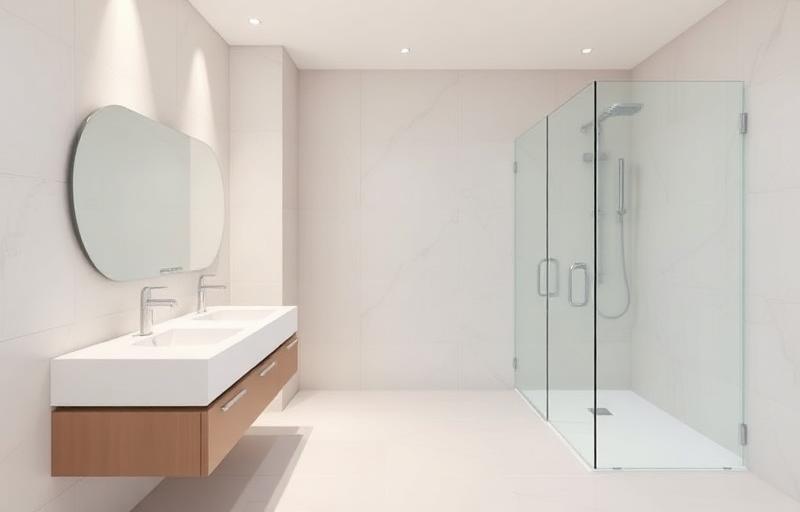
Low-Maintenance Bathroom Design Tips: How to Create a Stylish and Easy-to-Clean Space
December 5, 2024